APPOINTMENT-ONLY
BBB ACCREDITED
WOMAN OWNED · FAMILY RUN
Chattanooga Auto Film Pros
Tennessee Tint Law Guide

Tennessee
Window Tint
Laws 2026

Legal VLT percentages, installer requirements, medical exemptions, and penalties — explained by Chattanooga's appointment-only tint specialists.

Last verified: October 2026  ·  Tennessee Code Annotated § 55-9-107
Important: Under Tennessee law the vehicle owner has the burden of proving the tint is legal. Professional installers must put a compliance label on the driver's window and give you a signed receipt. Keep that receipt with your registration documents.

TN Tint Limits at a Glance

Tennessee's key number is 35%. On sedans and other cars it applies to every window. SUVs, trucks, and vans can go darker on the windows behind the front doors where federal rules allow factory-tinted glass. The front door windows are always 35%.

Windshield
70%
Film may not drop windshield VLT below 70%, other than the factory shade band
Front Side Windows
35%
Must allow at least 35% VLT — applies to every vehicle
Back & Rear (Cars)
35%
Sedans and other cars must allow at least 35% VLT on the back side windows and rear window
Back & Rear (SUV/Truck/Van)
Any
Where federal rules allow factory-tinted glass on those windows. Front doors never qualify
Penalty
Class C
A tint violation is a Class C misdemeanor
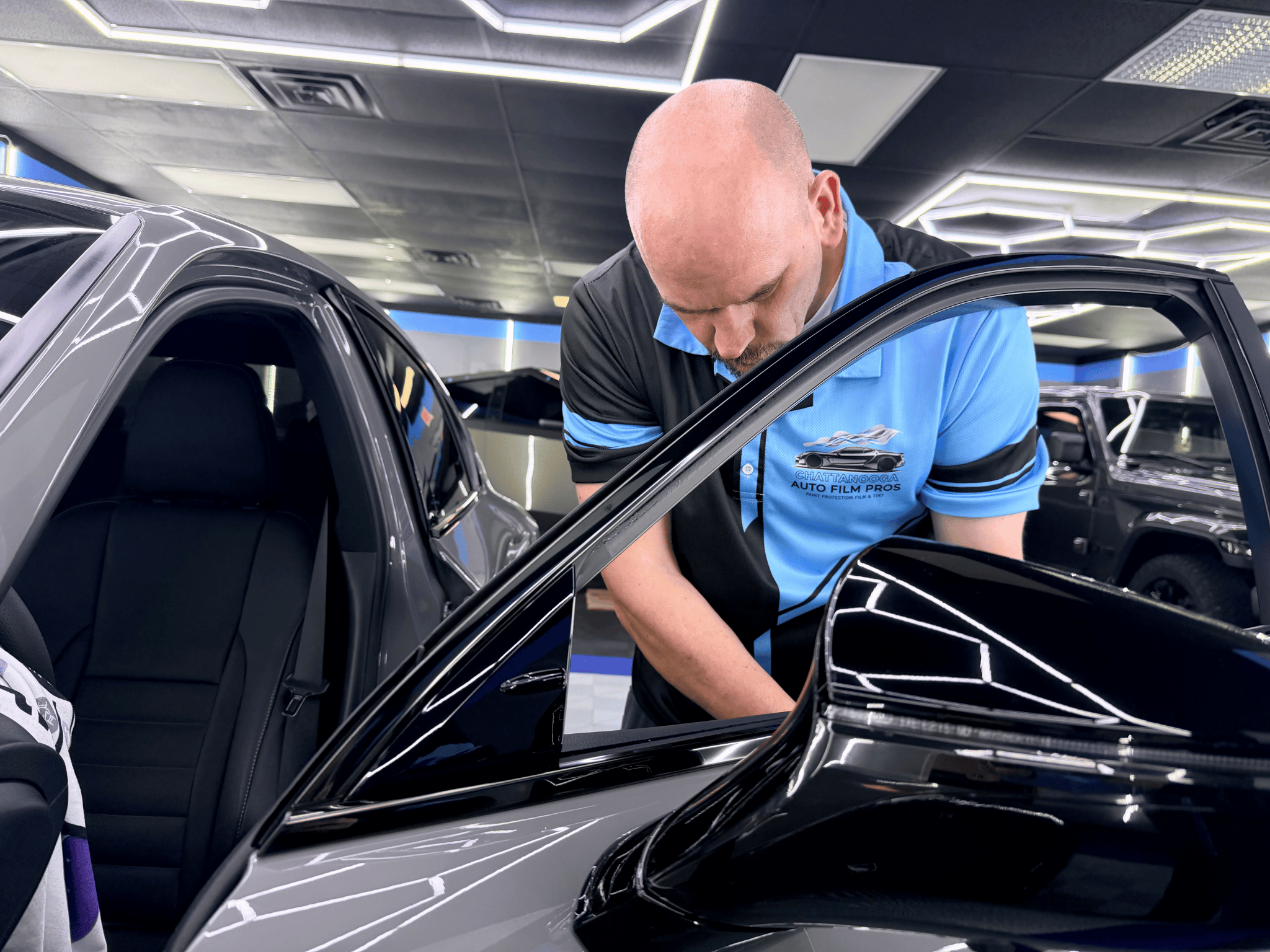
Window tint installation at Chattanooga Auto Film Pros
Prepping window tint installation Chattanooga TN

Complete TN Tint Law Table

Tennessee sets one 35% limit for cars. SUVs, trucks, and vans get an exemption on the windows behind the front doors.

Window Sedan / Car SUV / Truck / Van Status
Windshield 70% VLT min (shade band excepted) 70% VLT min (shade band excepted) Restricted
Front Side Windows 35% VLT min 35% VLT min 35% Min
Back Side Windows 35% VLT min Any darkness* Varies
Rear Window 35% VLT min Any darkness* Varies

*Applies to vehicle models that federal regulations permit to have factory-tinted glass on those windows, typically SUVs, trucks, and vans. Front door windows never qualify for the exemption.

What Your Installer Must Provide

Required Paperwork

  • An adhesive label on the lower right corner of the driver's window showing the installer's business name and "Complies with Tennessee Code Annotated, § 55-9-107"
  • A signed receipt with the install date and your vehicle's make, model, paint color, and license plate number and state
  • The receipt must carry the compliance statement and a note to keep it with your registration documents

Good to Know

  • The vehicle owner carries the burden of proof that the tint is legal
  • Officers may detain a vehicle for a field comparison test when they reasonably believe the tint is too dark
  • Refusing the field test is itself a Class C misdemeanor
  • Vehicles registered in another state that meet their home state's requirements are exempt from Tennessee's tint limits

Darker Tint for Medical Conditions

Tennessee allows a medical exemption for people with a medical condition that is adversely affected by ultraviolet light. Approval is not automatic.

Who Can Apply

  • Anyone whose physician certifies a medical condition adversely affected by ultraviolet light that requires darker tint than the standard limits allow
  • The department's medical review board decides whether the exemption is warranted and how dark you may go
  • Confirm with your doctor before booking a darker install

How to Qualify

  • Submit a statement from your physician to the Tennessee Commissioner of Safety certifying the condition
  • If approved, you receive a certificate or decal showing your degree of exemption, which you must display in the vehicle
  • If your application is denied, you can appeal under Tennessee's Uniform Administrative Procedures Act
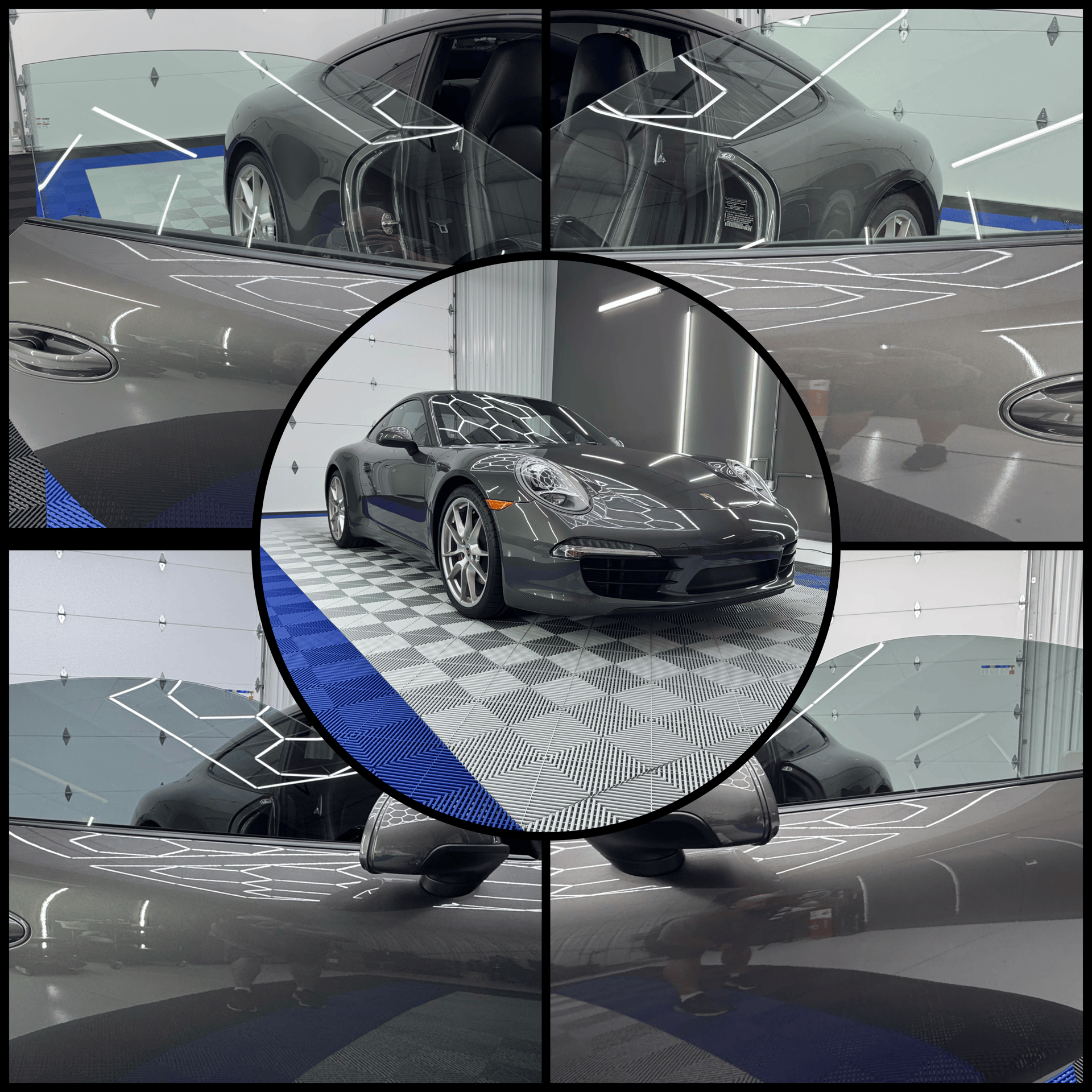
Porsche window tint installation Chattanooga Auto Film Pros
Porsche · Ceramic Window Tint · Chattanooga

Common Questions

What is the darkest legal tint in Tennessee?
On sedans and other cars, 35% VLT is the darkest legal limit on every window, front and back. On SUVs, trucks, and vans, the windows behind the front doors can go darker where federal rules allow factory-tinted glass, but the front door windows must still be 35%.
Does Tennessee treat SUVs and sedans differently?
Yes, behind the front doors. Cars must allow at least 35% VLT on every window. Vehicles federally permitted to have factory-tinted rear glass, typically SUVs, trucks, and vans, are exempt for those windows. The front door windows are 35% for every vehicle.
Can I tint my windshield in Tennessee?
Film cannot reduce the windshield's light transmission below 70% VLT, other than the manufacturer's factory shade band. A clear, high-VLT film is legal. A dark windshield tint is not.
What happens if my tint is too dark?
Officers can detain your vehicle for a field comparison test if they reasonably believe the tint is too dark. A violation is a Class C misdemeanor, and so is refusing the field test. The owner has the burden of proving the tint is legal.
Do I need a sticker to prove my tint is legal?
Yes. Tennessee requires professional installers to put an adhesive compliance label on the lower right corner of the driver's window and to give you a signed receipt for the install. Keep the receipt with your registration documents.
My vehicle is registered in Georgia. Which rules apply?
Tennessee's tint limits do not apply to a vehicle registered in another state that meets the requirements of its state of registration. If you're registered in Georgia, see our Georgia tint law guide.
Will ceramic tint stay within Tennessee's legal limits?
Yes — our ceramic tint installations are spec'd to Tennessee's legal limits by default. We measure the combined glass-and-film VLT on every install. You will not leave our shop with an illegal tint.

Installed Legal.
Every Time.

Every tint install at Chattanooga Auto Film Pros is verified to Tennessee's legal limits. Appointment-only, precision install, backed by a lifetime warranty.