Your paint is at its best the day you take delivery, and everything after that is preservation or repair. Here is what to protect first on a new vehicle, in what order, and what to skip.

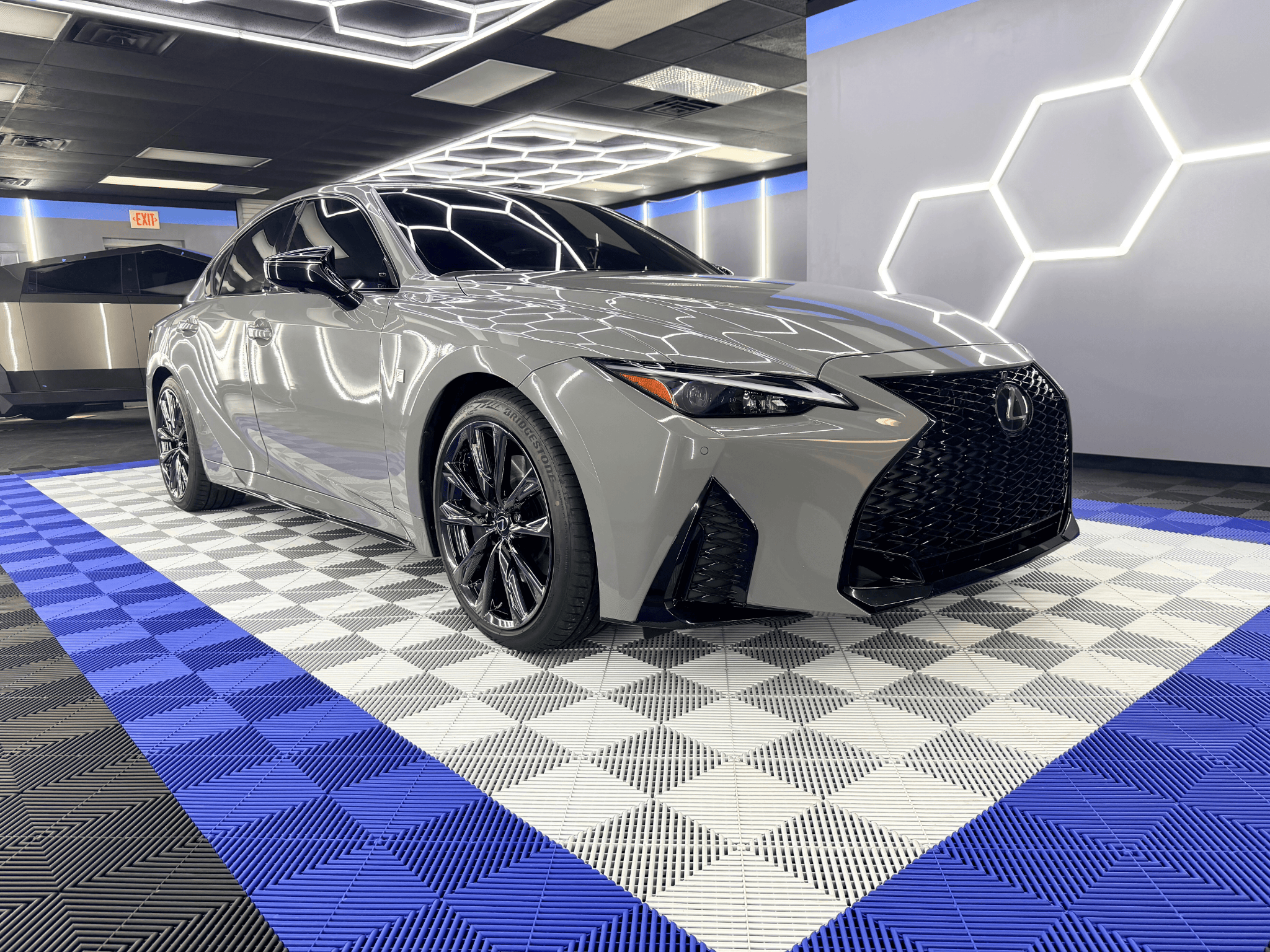




The day you take delivery, your paint is in the best condition it will ever be in. Every decision after that is either preserving that condition or paying to restore it later.
Here is what actually matters on a new vehicle, in what order, and what to skip.
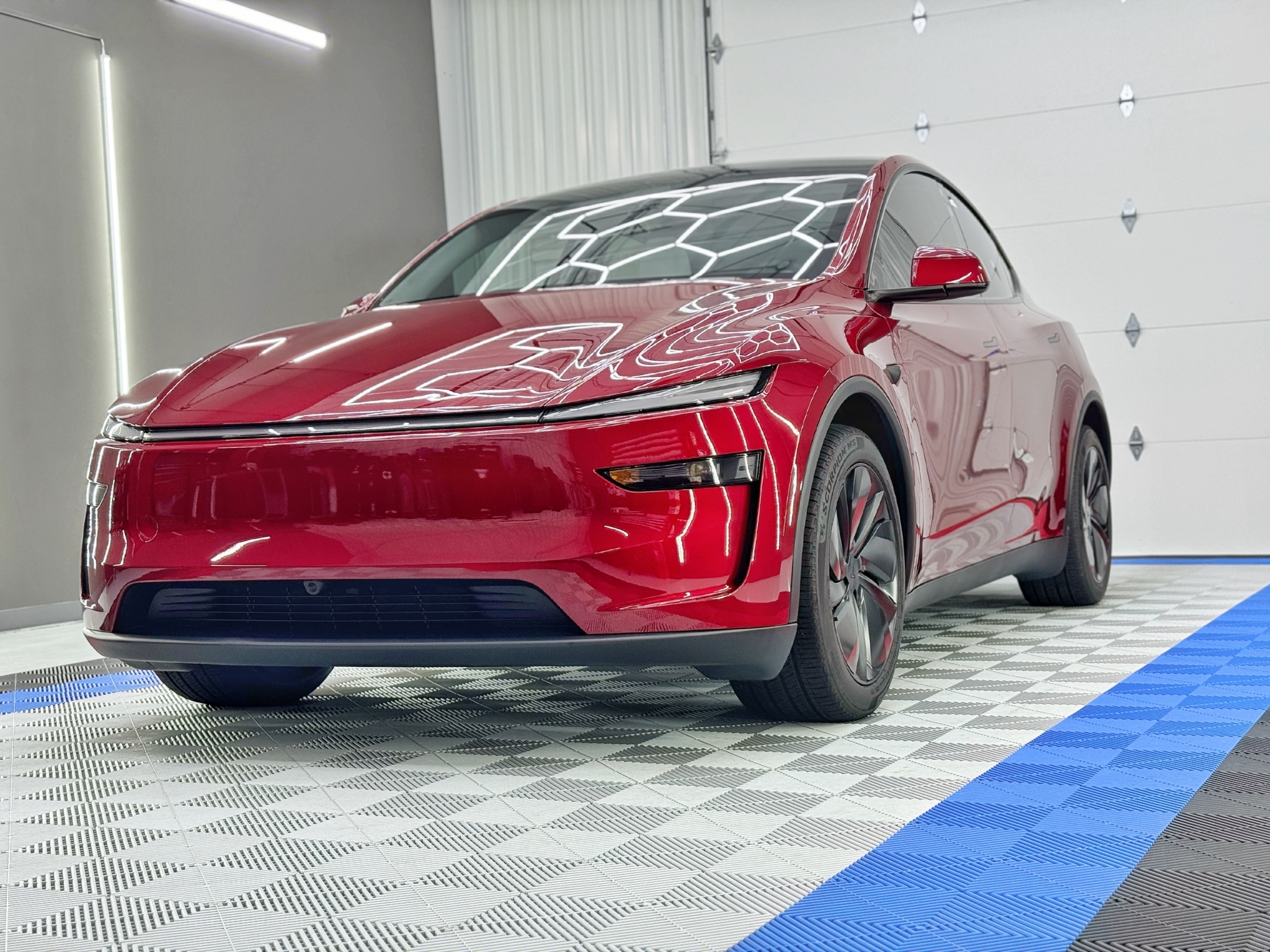
This is the step people skip because it seems unnecessary on a new car.
New vehicles are not clean. They travel by rail and truck, sit on lots for weeks, and get washed by dealer prep staff using methods that vary enormously. Along the way they pick up rail dust, industrial fallout, and often a set of fresh swirl marks from a dealer wash.
Run your hand lightly across the hood of a new car. If it feels gritty rather than glass smooth, that texture is bonded contamination sitting on the clear coat.
Whatever is on that paint when film or coating goes on is sealed there. Decontamination first is not an upsell — it determines whether everything after it performs.
If dealer prep left light swirls, a single-stage correction removes them before anything gets locked in.
Not every new car needs this. Some arrive genuinely clean. The way to know is to look at the paint in direct sun at an angle, or under a bright light held close. Fine circular scratches radiating from the reflection are swirls.
The reason this matters now rather than later: film and coating are both transparent. They do not hide defects, they preserve them.
Film is the only product that stops rock chips, and chips are the damage that cannot be corrected afterward.
Minimum worth doing: front bumper. It takes more debris than any other panel and it is the least expensive place to start.
The sensible standard: partial or full front — hood, fenders, bumper, mirrors, headlights. This covers the zone that takes the overwhelming majority of highway debris.
Small additions with outsized value: door cups and the area behind the front wheels. Door cups take fingernail damage every time someone opens a door. Behind the wheels takes constant debris from your own tires. Both are small, inexpensive, and almost always worth adding.
Full vehicle: for exotics, low-production cars, and anything where preserving original paint materially changes resale.
Coating handles what film does not: UV oxidation, chemical etching from bird droppings and sap, and water spotting. It also makes the vehicle substantially easier to wash, which matters more day to day than people expect.
On a new car the case is strongest, because you are protecting an undamaged surface rather than sealing in existing defects.
Coating goes over the film as well as the bare paint. That evens out how the whole vehicle cleans and protects the film from staining.
UV is what ages an interior. Dashboards fade, leather dries and cracks, trim dulls — and none of it reverses.
Ceramic tint blocks 99 percent of UV and up to 96 percent of infrared heat. On a new vehicle with an undamaged interior, that protection starts working before any degradation has occurred.
Tennessee permits 35 percent VLT on front side windows. Heat rejection comes from film technology rather than darkness, so a legal shade in ceramic outperforms a darker shade in cheaper film.
Steps one through four have to happen in that sequence. Tint is separate and can be scheduled whenever.
Dealer protection packages. Typically a sealant or entry-level coating applied quickly during prep at significant markup, without the decontamination that makes protection work. The product may be fine; the application usually is not.
Fabric and leather protection sold at the finance desk. Same pattern — real products, applied quickly, priced high.
Doing everything at once if the budget is tight. Film on the front end is the highest-value single step, because chips cannot be corrected. Coating can follow later. Correction gets harder and more expensive the longer you wait, but it remains possible.
None of this becomes useless on a car that already has some miles. Correction restores the finish, and film and coating go on afterward.
What changes is cost. Correction on a three-year-old daily driver takes considerably more labor than on a new vehicle. The work is the same; there is just more of it.
New paint is the best paint your car will ever have. Everything from here is either preservation or repair, and preservation costs a fraction of repair.
You do not have to do everything at once. But the sequence matters, and the window where prevention is easiest is narrower than most people expect.
Answers to the burning questions in your mind.

Soon, but not necessarily the same week. New paint from the factory is fully cured by the time the vehicle reaches a dealer, so there is no waiting period for film or coating on a factory finish.
What matters more is mileage. Every highway mile before film goes on is exposure you cannot undo. If the car is going to be a daily commuter, sooner is genuinely better.
Repainted panels are different — fresh paint from a body shop needs weeks to fully outgas before film or coating goes over it.
Almost never. Dealer packages are typically sealants or entry-level coatings applied quickly during prep, at a substantial markup, and they rarely include the paint decontamination or correction that makes protection perform.
The product may be legitimate. The application usually is not. If you want protection, buying it separately from someone who does only that work gets you a better result for similar money.
Yes, and this surprises people. New vehicles pick up contamination during transport, storage, and dealer lot time — rail dust, industrial fallout, and sometimes wash marring from dealer prep.
Run your hand across the hood of a new car. If it feels gritty rather than glass smooth, that is bonded contamination, and it needs to come off before any protection goes on.