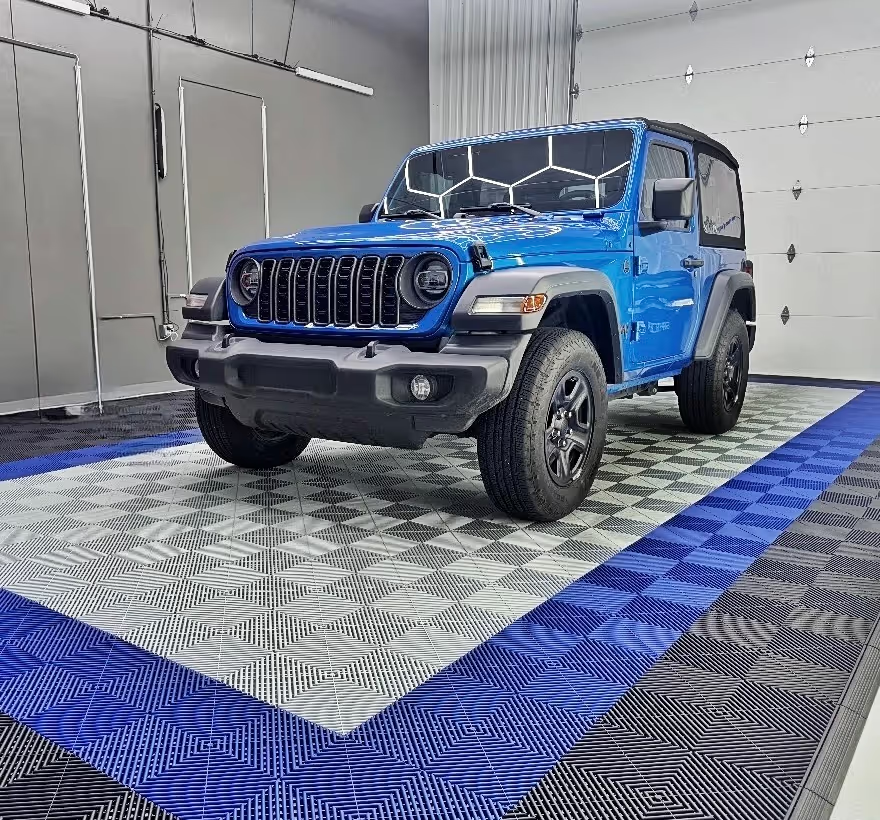
Trucks take damage in a different pattern than cars, and standard coverage packages are built around sedans. Here is where the damage actually accumulates on a taller vehicle and which areas are worth covering.






Trucks and SUVs take damage in a different pattern than cars do, and standard coverage packages are designed around sedans.
Here is where the damage actually accumulates on a taller vehicle, which areas deliver the most protection per dollar, and what film will and will not handle.
Three things change the damage pattern on a taller vehicle.
Ride height and tire exposure. A truck sits higher with more of the tire uncovered, which means debris thrown by the front tires travels further back and higher up the body. A sedan concentrates that spray on a small area behind the wheel. A truck spreads it across the entire rocker panel and into the rear door.
Larger flat panels. Big hoods and tall fenders present more surface area to oncoming debris. There is simply more paint in the impact zone.
How trucks get used. Gravel driveways, job sites, boat ramps, trailheads. Even trucks that never leave pavement tend to see more gravel than the average commuter car.
If you walk a used truck on a lot, the damage clusters in predictable places.
Rocker panels. The strip below the doors takes constant blasting from the front tires. On a truck this area is large, low, and almost always neglected.
Behind the front wheels. The leading edge of the rocker and the lower rear portion of the front fender. Factory film here is usually a token strip a few inches wide.
Lower doors. Debris that clears the rocker lands here.
Front bumper and hood leading edge. Same as any vehicle, but with more surface area.
Bed rails and tailgate top edge. Anything loaded or unloaded drags across these.
Standard front-end packages were designed around cars. On a truck, the highest-value coverage looks different.
Rocker panels first, if the truck sees gravel. This is the area with the worst damage-to-attention ratio on most trucks. It is not glamorous coverage and nobody notices it, which is exactly why it gets skipped.
Full front. Hood, fenders, bumper, mirrors, headlights. The larger panels on a truck make the seam line of a partial front more visible, so full front tends to look better here than on a car.
Bed rails and tailgate edge. High value for a small amount of film. A bed liner protects the inside of the bed and does nothing for the painted rails you drag a cooler across.
Door cups and door edges. Same argument as any vehicle, and trucks tend to get opened by people wearing work gloves with tools in hand.
A-pillars and roof leading edge. On taller vehicles these catch debris that would pass over a sedan entirely.
Being straight about the limits.
Film handles gravel and road debris. It does not stop deep gouges from tree branches on a trail, and it does not prevent dents. If the impact is hard enough to deform the panel, film changes nothing about that.
Film also does not replace a bed liner. Different products, different jobs.
The economics are different when a truck is a business asset.
Resale matters more, because fleet vehicles get cycled on a schedule and condition drives what they bring. A truck with clean rockers and an undamaged front end appraises meaningfully better than one that looks like it has been worked hard, even when the mechanical condition is identical.
Downtime matters too. A truck in a body shop is a truck not generating revenue. Preventing damage avoids that entirely.
And there is a presentation argument. If your trucks show up at customer sites, they are part of how the business is perceived.
Worth flagging, because it changes the calculation substantially.
Aggressive tires throw considerably more debris than street tires, and a lift increases the exposed area. If the truck is lifted with knobby tires, rocker panel and lower door coverage moves from optional to the first thing worth doing.
Wider tires without matching fender coverage also throw debris outside the wheel well entirely, which puts spray onto areas that would normally be protected by the fender itself.
On trucks specifically, coating over everything makes washing dramatically easier — and trucks get dirty enough that this is a practical benefit rather than a luxury.
Mud and road grime release far more easily from a coated surface. For a vehicle that regularly comes home covered in whatever it drove through, that is the difference between a rinse and a scrub.
Trucks and SUVs collect damage in places sedans simply do not, and the panels taking the worst of it are the ones most owners never think to protect.
If your truck gets used like a truck, coverage should follow where the damage actually happens — not where the film looks most impressive.
Answers to the burning questions in your mind.

Rocker panels and the area behind the front wheels, and it is not close. Trucks sit higher with more tire exposed, which throws more debris across a wider area than a sedan does.
Most manufacturers apply a token strip of film behind the front wheels from the factory, often only a few inches wide. That strip exists because they know the area takes abuse. It is just sized to a cost target rather than to the actual spray pattern.
Yes, and it is one of the better values on a truck. The bed rail takes damage every time something gets loaded or unloaded, and the tailgate top edge takes it from anything sliding over it.
Bed liners protect the inside of the bed. They do not protect the painted rails and tailgate edge that you drag lumber, coolers, and toolboxes across.
Film handles gravel and road debris, which is most of what a truck encounters. It does not stop deep gouges from branches, rocks against a rocker panel at low speed, or anything that would dent the panel underneath.
If you are running trails where body contact is expected, film reduces the cosmetic damage but it is not armor. Set expectations accordingly.