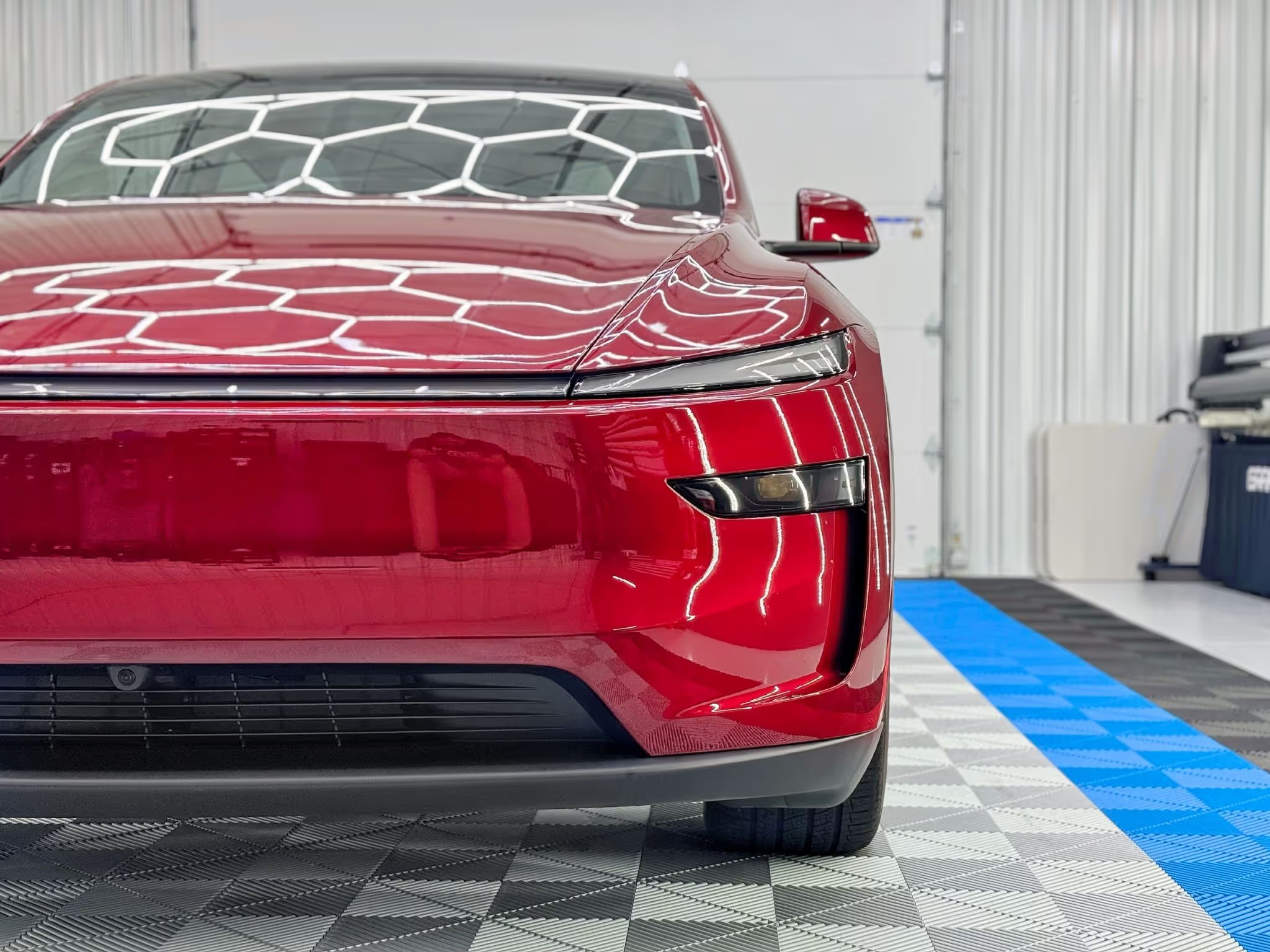
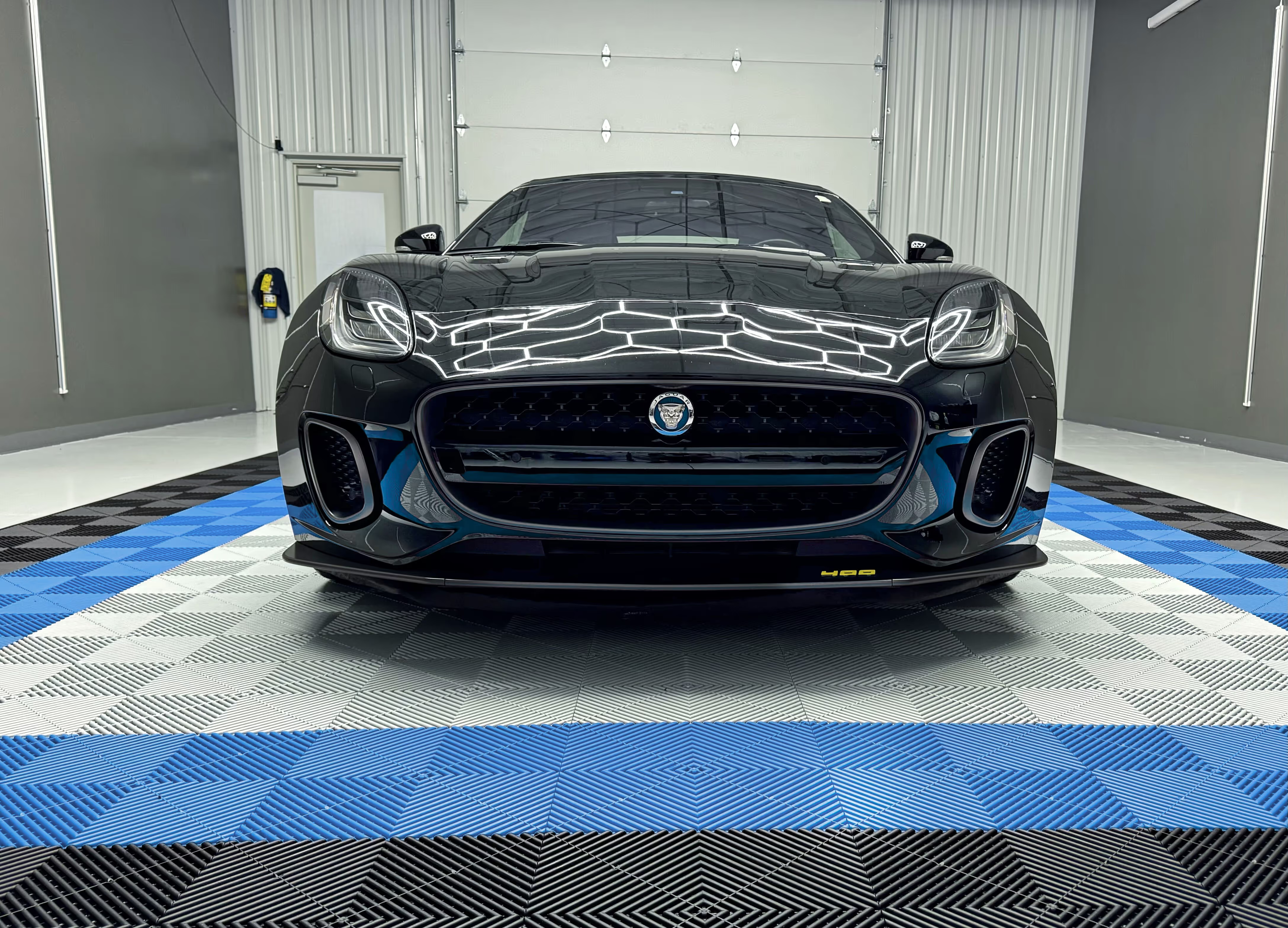
Paint protection film and ceramic coating are not alternatives — they solve different problems. Here is what each protects against, where they overlap, and how to decide what your vehicle needs.

.png.webp)


.png)
Paint protection film and ceramic coating get compared constantly, usually by people trying to decide between them. That framing is the problem — they are not alternatives.
They protect against different things. Here is what each one actually does, where they overlap, and how to decide what your vehicle needs.
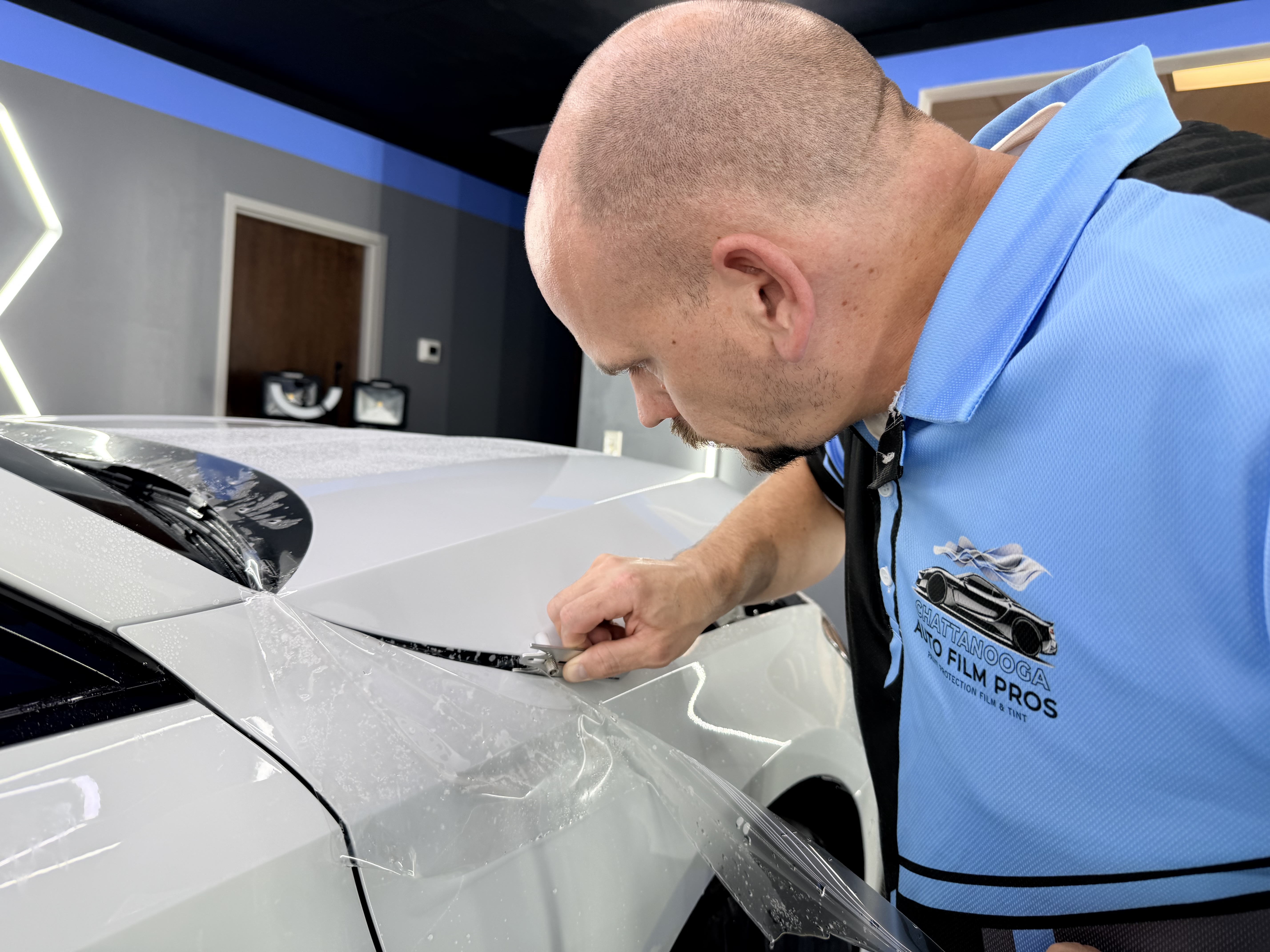
Paint protection film is a physical barrier. It is a clear urethane layer, meaningfully thick, applied over your paint. When a rock hits it, the urethane absorbs and disperses that energy across its own thickness instead of transmitting it into the clear coat.
Ceramic coating is a chemical barrier. It is a liquid polymer that bonds to your clear coat and cures into a hard, transparent layer measured in microns. It resists UV oxidation, acidic contamination, and chemical etching, and it makes the surface hydrophobic so water and dirt release easily.
The distinction that matters: film stops things from hitting your paint. Coating stops things from reacting with it.
Film prevents: rock chips, road debris impact, bug etching on the front end, scratches from washing and daily contact, and the fine marring that accumulates on leading edges.
Coating prevents: UV oxidation and fading, chemical etching from bird droppings and tree sap, water spotting from mineral deposits, and it makes contamination far easier to remove before it does damage.
Neither prevents: door dings, deep scratches from keys or shopping carts, or collision damage.
Film is priced by area covered and it is labor-intensive, which is why coverage levels exist. Partial front, full front, and full vehicle represent real differences in material and installation time.
Coating is priced by vehicle size and by the condition of the paint underneath, because paint correction has to happen first. A neglected daily driver needing multi-stage correction costs considerably more than a nearly new car needing a single finishing pass.
Practically, most people cover the front end in film and coat the entire vehicle. That puts physical protection where impact happens and chemical protection everywhere.
Quality film carries a 10-year warranty and generally lives up to it, with self-healing top layers that recover from light scratches when warmed by sun or hot water.
Coating durability depends on the grade and on maintenance. Professional coatings are rated in years, and the top-tier formulations considerably longer. What determines whether you get the rated life is how the car is washed afterward — brush washes and harsh chemistry degrade coatings quickly.
Highway commuter. Film on the front end is the priority. You are accumulating rock chip exposure every day, and chips are the damage that cannot be corrected later.
Garage-kept weekend car. Coating over the whole vehicle probably delivers more benefit. Impact exposure is low, but UV and contamination still happen whenever it is out.
New vehicle you plan to keep. Both. This is the case where the combination clearly pays off, because you are protecting original paint from day one rather than trying to preserve something already degraded.
Older vehicle with existing paint damage. Neither product fixes what is already there. Correction first, then decide. Film and coating both lock in whatever is underneath them.
Leased vehicle. Film on high-wear areas can offset end-of-lease charges. Coating is harder to justify since the durability benefit transfers to whoever gets the car next.
The typical approach is film on the hood, fenders, bumper, mirrors, headlights, and door cups, then ceramic coating over the entire vehicle including the film itself.
Coating over film matters more than people expect. Film has a slightly different surface texture than paint, and coating it evens out how the whole car cleans and behaves. It also protects the film from staining, which is the main cosmetic complaint people have about it long term.
Film stops impact. Coating stops chemistry. Neither replaces the other, and the right answer depends on what you are actually worried about.
If you are protecting a new vehicle you plan to keep, film on the front end and coating over everything is the combination that covers both threats.
Answers to the burning questions in your mind.

Yes, and it is common. Ceramic coating can be applied over paint protection film, and many installers recommend it. The coating adds hydrophobic properties and chemical resistance to the film surface itself, which makes the film easier to clean and helps it resist staining.
The usual approach is film on high-impact areas and coating over the entire vehicle, including on top of the film.
If you have to choose one and the vehicle is a daily driver seeing highway miles, film on the front end addresses the damage that cannot be undone. Rock chips require refinishing. Chemical etching can often be corrected.
If the vehicle is garage-kept and rarely sees highway speed, coating over the whole car may deliver more day-to-day benefit for the money.
No. Coating is measured in microns and it is not a physical barrier. A rock at highway speed carries enough energy to breach clear coat regardless of what is coating the surface.
Coating resists chemical damage and light marring. Impact is a different problem entirely.
.avif)