Old tint has to come off before new film goes on. Here is why film turns purple and bubbles, what makes the rear defroster grid the real risk, and why layering new tint over old never works.

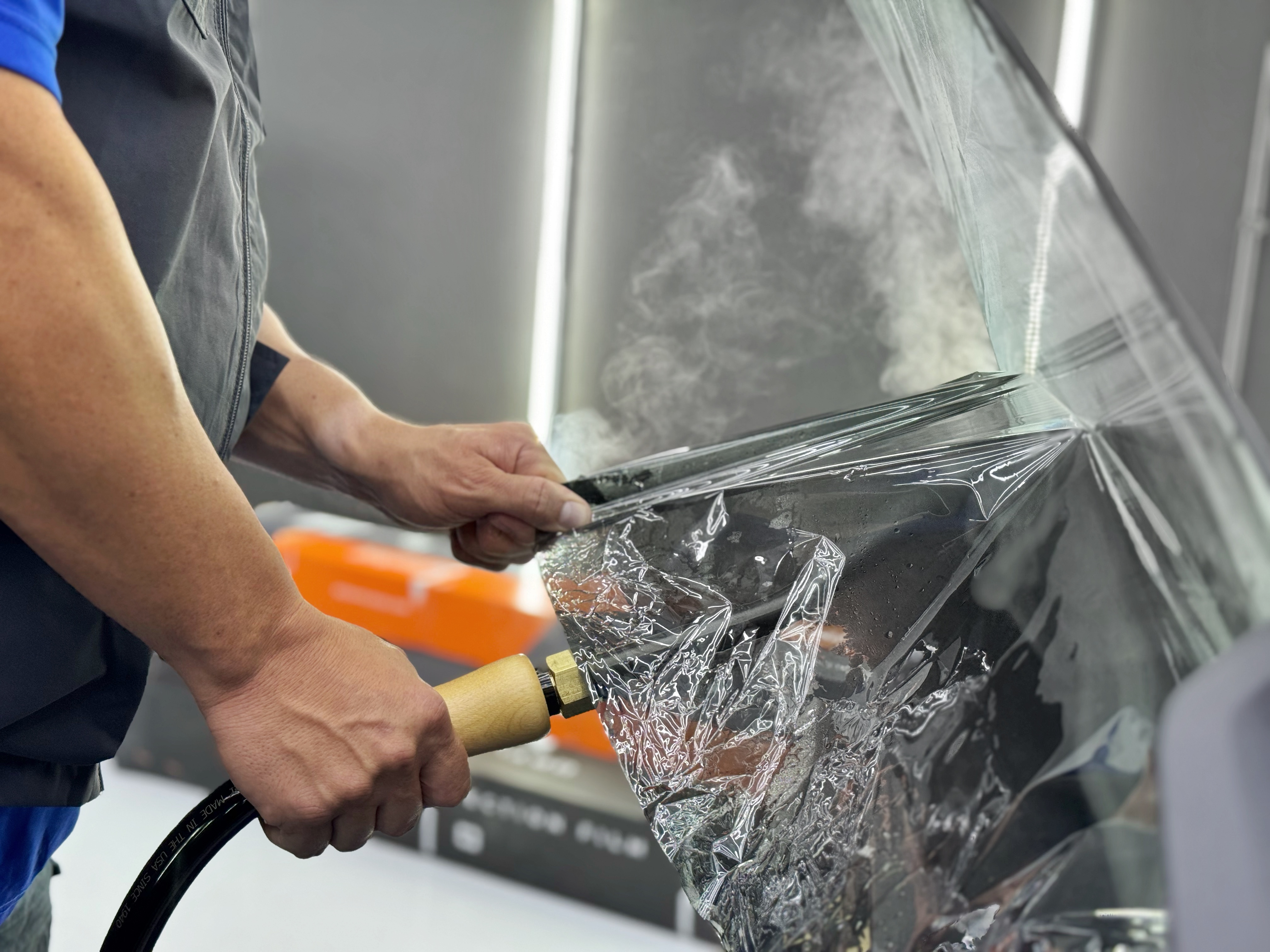





Old window tint has to come off before new film goes on, and removal is the part of the job people underestimate most.
Here is why film fails in the first place, what makes removal genuinely risky on the rear glass, and why layering new tint over old is never the answer.

Two failure modes account for nearly everything you see on the road.
Purple film. This is dyed film reaching the end of its life. Cheap tint uses a dye layer to achieve its color, and UV exposure breaks that dye down over years. As it degrades, the color shifts — first toward brown, then to the purple that makes a car look neglected from fifty feet away.
Ceramic and carbon films do not do this, because they do not rely on dye for color. This is the single most visible difference between cheap film and quality film, and it shows up around year three to five.
Bubbling. This is adhesive failure. The bond between film and glass breaks down, usually starting at edges and corners where heat and moisture reach it first. Once bubbling starts it spreads, and there is no fixing it — the adhesive is done.
Both failures are permanent. Nothing applied to the surface reverses either one. Removal and replacement is the only path.
Removing film is two separate problems: getting the film off, and getting the adhesive off.
Film that is still in reasonable condition often peels in large sheets if heated properly. Film that has degraded shreds into small pieces, which turns a straightforward job into a tedious one.
The adhesive is the harder half. It stays on the glass after the film comes off, and it does not respond to ordinary glass cleaner. It requires heat, dwell time with an appropriate solvent, and patient work with a plastic blade.
This is where DIY removal goes wrong most often, and it is the one mistake with no cheap fix.
Those thin horizontal lines across your rear glass are the defroster grid. They are conductive strips bonded to the inside surface of the glass — the same surface your tint is stuck to.
A razor blade scraping adhesive off that glass will cut through them. Pulling film off aggressively can lift them away with it. And because they are thin and the same general color as the adhesive residue, it is easy to damage them without noticing until winter.
Once a line is broken, that section of the defroster stops heating. Repair options are a conductive repair kit, which works inconsistently and looks like what it is, or replacing the rear glass entirely.
Professional removal on rear glass uses steam or controlled heat with plastic tools and no blades near the grid lines. It is slower for exactly this reason.
Occasionally someone asks whether new film can go over existing tint to save the removal cost. It cannot, for several reasons.
Film adhesive is designed to bond to glass, not to another film's surface. The bond is weaker and it fails sooner.
Two layers of film also stack their light blocking. Existing film plus new film produces a much darker reading than either alone, which usually puts the vehicle outside legal limits.
And whatever was wrong with the old film — bubbles, creases, degraded adhesive — shows through the new layer. You are paying for a new install that looks like the old failing one.
Heat is applied to soften the adhesive without damaging the glass or surrounding trim. On rear glass this is done carefully around the defroster grid.
Film is peeled at a controlled angle and speed. Too fast and it tears; too aggressive and it takes defroster lines with it.
Remaining adhesive is dissolved rather than scraped, using appropriate solvent with dwell time, and worked with plastic tools rather than blades on any glass with a grid.
Glass is then fully cleaned and inspected before new film goes on. Any adhesive residue left behind will show as a defect under the new film, permanently.
Removal is quoted separately from installation, because the labor varies enormously with the age and condition of the existing film.
Three-year-old ceramic film being upgraded comes off in a fraction of the time that twenty-year-old dyed film takes. The old stuff shreds, the adhesive has hardened, and the process is genuinely slow.
Any shop quoting removal sight unseen is guessing. We look at the vehicle, assess the film condition, and give you a number based on what is actually there.
If you are removing failed film, this is the moment to upgrade rather than repeat. The purple film on your car got there because it was dyed film, and installing dyed film again produces the same outcome on the same timeline.
Ceramic film does not fade to purple, does not bubble in the same way, and carries a lifetime warranty. Given that you are already paying for removal labor, the incremental cost of better film is the smallest part of the decision.
Tint removal is slow, tedious work that most people underestimate until they are two hours into one window with half of it still covered in adhesive.
Done professionally, it is a matter of hours. Done badly, it can cost you a rear defroster grid — which is the one mistake with no cheap fix.
Answers to the burning questions in your mind.

Purple film is dyed film that has failed. The dye layer breaks down under UV exposure, and as it degrades the color shifts — first toward brown, then purple.
It is not repairable. The dye is inside the film, so nothing applied to the surface changes it. The only fix is removal and replacement, ideally with ceramic film, which does not use dye and therefore does not fade this way.
The rear defroster. Those thin lines running across the back glass are the defroster grid, and they sit on the inside surface — the same surface the film is stuck to.
Scraping with a blade cuts them. Pulling film off too aggressively lifts them off the glass. Once a line is broken, that section of the defroster stops working, and repair means either a conductive repair kit with mixed results or replacing the glass.
Timing varies by how old the film is, how it was installed, and what condition it is in. Older film with degraded adhesive takes longer than newer film, because it tends to shred rather than release in sheets.
We quote removal separately from installation for exactly this reason. A vehicle with failed twenty-year-old film is a different job than one with three-year-old film being upgraded.