On a gas car, air conditioning runs off the engine. On an EV, it draws from the same battery that moves the vehicle. Here is what that changes about window tint, plus the glass roof problem and why film choice matters.

.png.webp)


.png)
Window tint on an electric vehicle is a different calculation than on a gas car, and it is not just about comfort.
Here is why EVs benefit differently, what a large glass roof changes, and why film choice matters more on a vehicle where everything is connected.
In a combustion vehicle, the air conditioning compressor runs off the engine. The fuel cost of running it exists, but it is small enough that most drivers never think about it.
In an electric vehicle, climate control draws directly from the same battery pack that moves the car. Cooling a cabin that has been sitting in Tennessee summer sun is a measurable draw, and it shows up as range.
Ceramic film blocks up to 96 percent of infrared heat before it enters the cabin. Less heat entering means less heat to remove, less compressor runtime, and less energy spent on climate instead of miles.
Being honest about scale: this is not a dramatic range increase. It is a real but modest effect, most noticeable on hot days after the car has been parked in sun. The stronger arguments are comfort and interior protection.
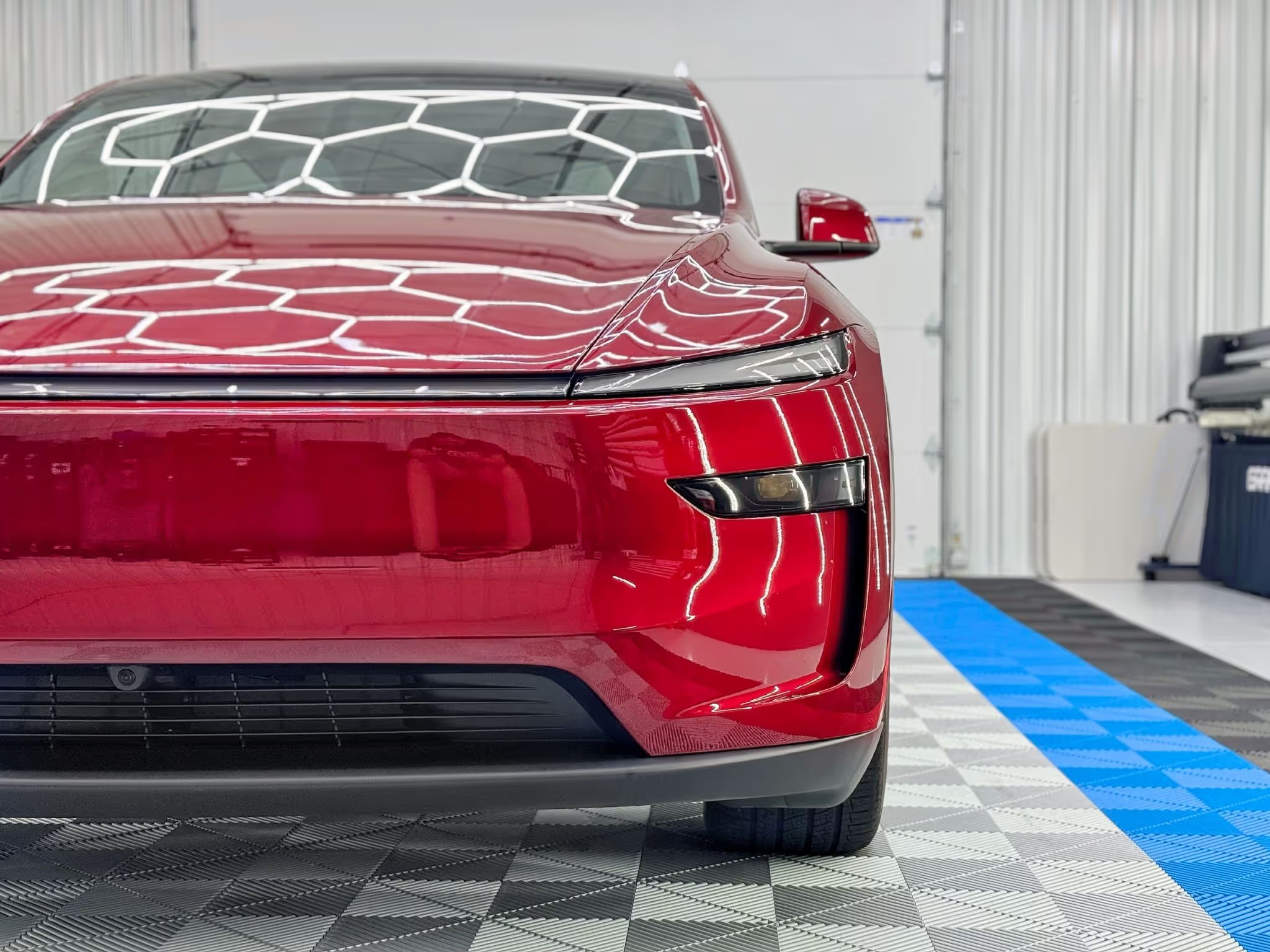
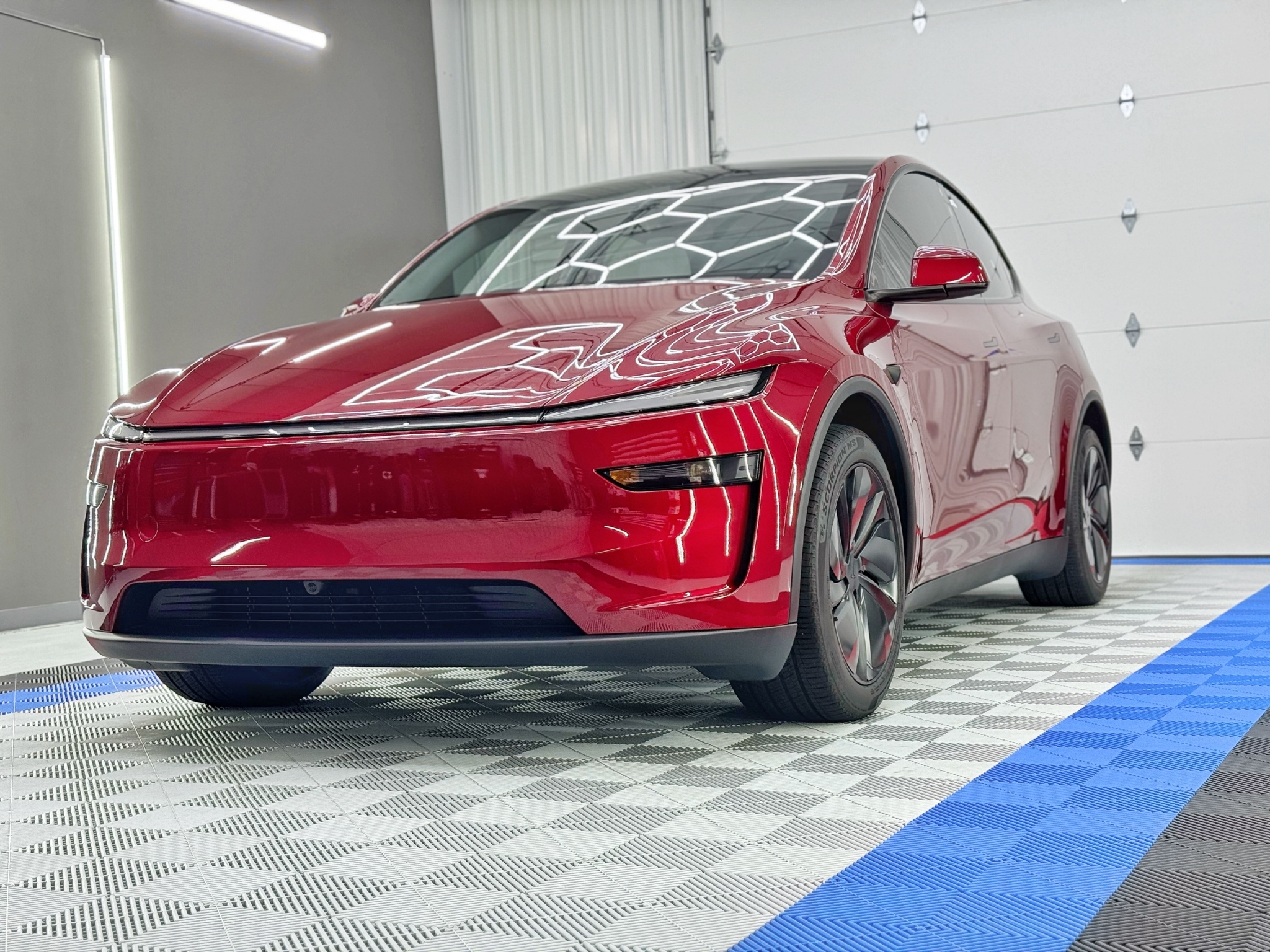
Most Teslas and many other EVs carry a large panoramic glass roof. That is a substantial surface taking direct sun, positioned directly above the occupants.
Factory glass provides some UV filtering and sometimes infrared treatment, but it is engineered to a cost target rather than to maximum performance. On a bright day, put your hand near the roof glass in an untreated vehicle and you will feel the difference.
Roof film addresses this directly. It is also one of the more technically demanding installs, because of the size and curvature of the panel.
Film type matters more on an EV than on almost any other vehicle, for one specific reason: signal interference.
Older metallic and dyed-metal films contain conductive material that can interfere with radio frequencies. On a modern connected vehicle — and especially an EV, where the phone is often the key, over-the-air updates are routine, and navigation is central to the driving experience — that is not a tradeoff worth taking.
Ceramic film is non-metallic and non-conductive. Cellular, GPS, satellite radio, key fob, tire pressure sensors, and toll transponders all function normally.
The other reason is performance. Heat rejection is a property of the film technology, not its darkness. Carbon film can be very dark and still let substantial heat through. Ceramic can be relatively light and block far more. On a vehicle where you care about heat load, that distinction is the whole point.
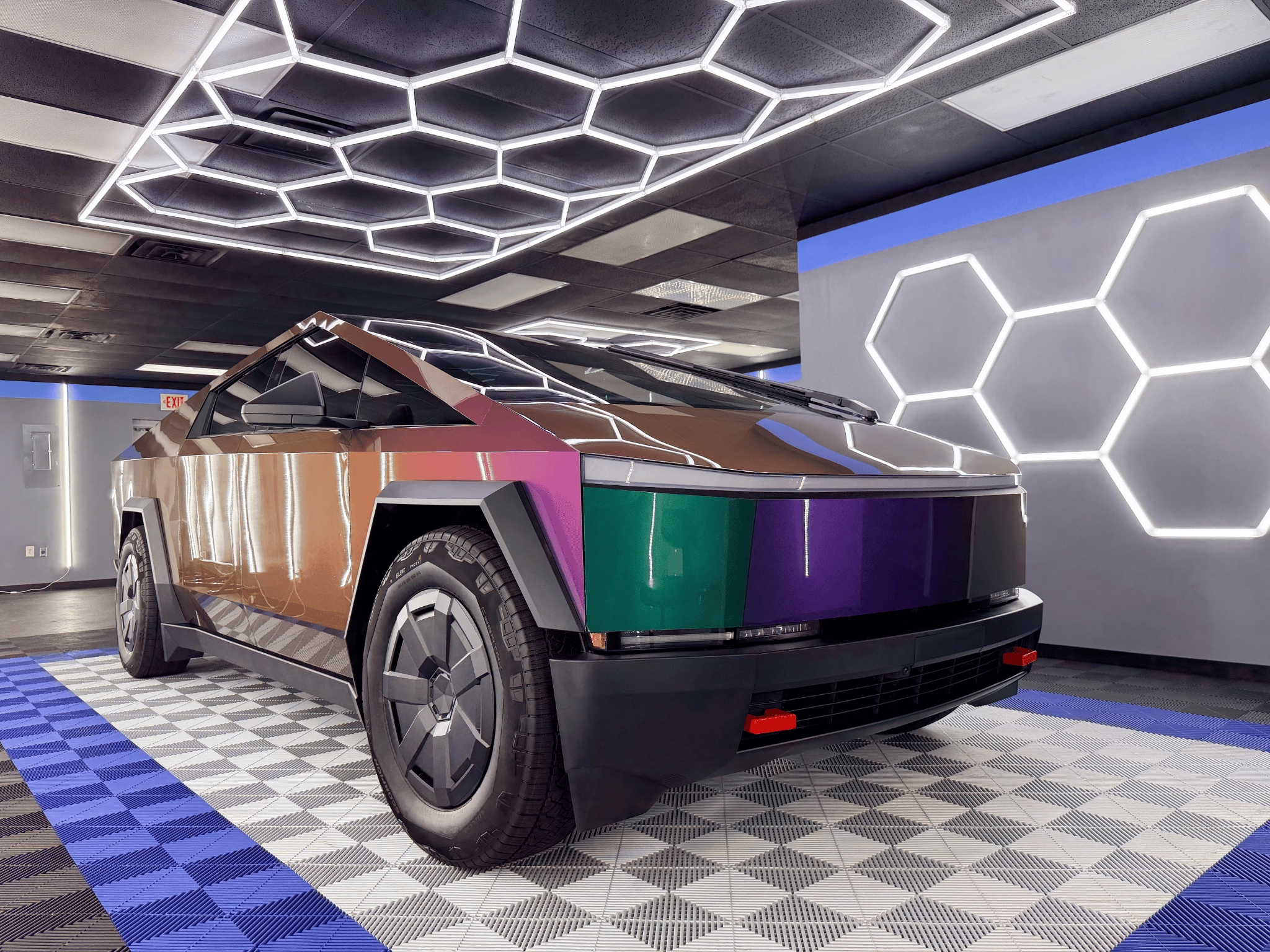
Large single-panel glass, aggressive curvature, and the Cybertruck's panoramic windshield in particular are among the more demanding installs in the industry. The geometry drives both time and price.
Interior electronics near the glass also require care during installation. Water and slip solution are part of the process, and modern EVs have sensors and trim in places that need protecting during the work.
Tennessee permits 35 percent VLT on front side windows. Rear side windows and the rear windshield may be darker. Windshields allow non-reflective film above the AS-1 line.
EVs are not exempt from any of this, and legality is measured on the glass with a meter that reads film plus factory tint together. Vehicles that already have privacy glass in the rear are starting from a darker baseline, which affects what can legally be added.
We meter the glass and tell you where you stand before you leave.
The half of this that matters most over the long run has nothing to do with range.
UV is what fades dashboards, dries and cracks leather, and dulls interior trim. That damage accumulates slowly and does not reverse. Ceramic film blocks 99 percent of it.
On EVs with light-colored interiors — which are common — the visual effect of UV damage shows up faster and more obviously than on dark interiors. Protecting the material from day one is considerably cheaper than living with a faded dash.
Electric vehicles have a reason to care about heat that gas cars do not. The energy your climate system spends cooling a heat-soaked cabin is energy that is not moving the car.
Add a large glass roof and the surface area taking sun is substantial. Ceramic film addresses both without touching the electronics that make the vehicle work.
Answers to the burning questions in your mind.

No. Ceramic film is completely non-metallic and non-conductive, which is exactly why it is the right choice for modern vehicles. Cellular signal, GPS, satellite radio, key fob range, tire pressure sensors, and toll transponders all work normally.
Older metallic and dyed-metal films could interfere with signal. Ceramic does not, and this matters more on an EV where nearly everything is connected.
Real, but modest, and it depends heavily on conditions. The effect comes from reducing how hard the climate system has to work rather than from any direct efficiency gain.
You will notice it most on hot days when the car has been parked in the sun — less time and energy spent pulling cabin temperature down before the system reaches a steady state. On a mild day the difference is small. We would not sell tint on range claims alone; the comfort and interior protection are the stronger arguments.
Many EVs come with glass that has some factory UV filtering and occasionally infrared treatment. It helps, but it is not equivalent to ceramic film.
Factory glazing is designed to a manufacturing cost target. Ceramic film blocks up to 96 percent of infrared and 99 percent of UV, which is a meaningfully different level of performance. If your roof glass feels warm to the touch on a sunny day, factory treatment is not doing the whole job.
.avif)