New tint looks hazy and may show small bubbles for the first couple of weeks. Here is what curing actually is, what to avoid during it, and how to tell normal from an actual defect.

.png.webp)


.png)

Your tint is going to look slightly wrong for the first week or two. That is expected, and it is not a defect.
Here is what happens during curing, what you need to avoid, and how to tell the difference between normal and a genuine problem.
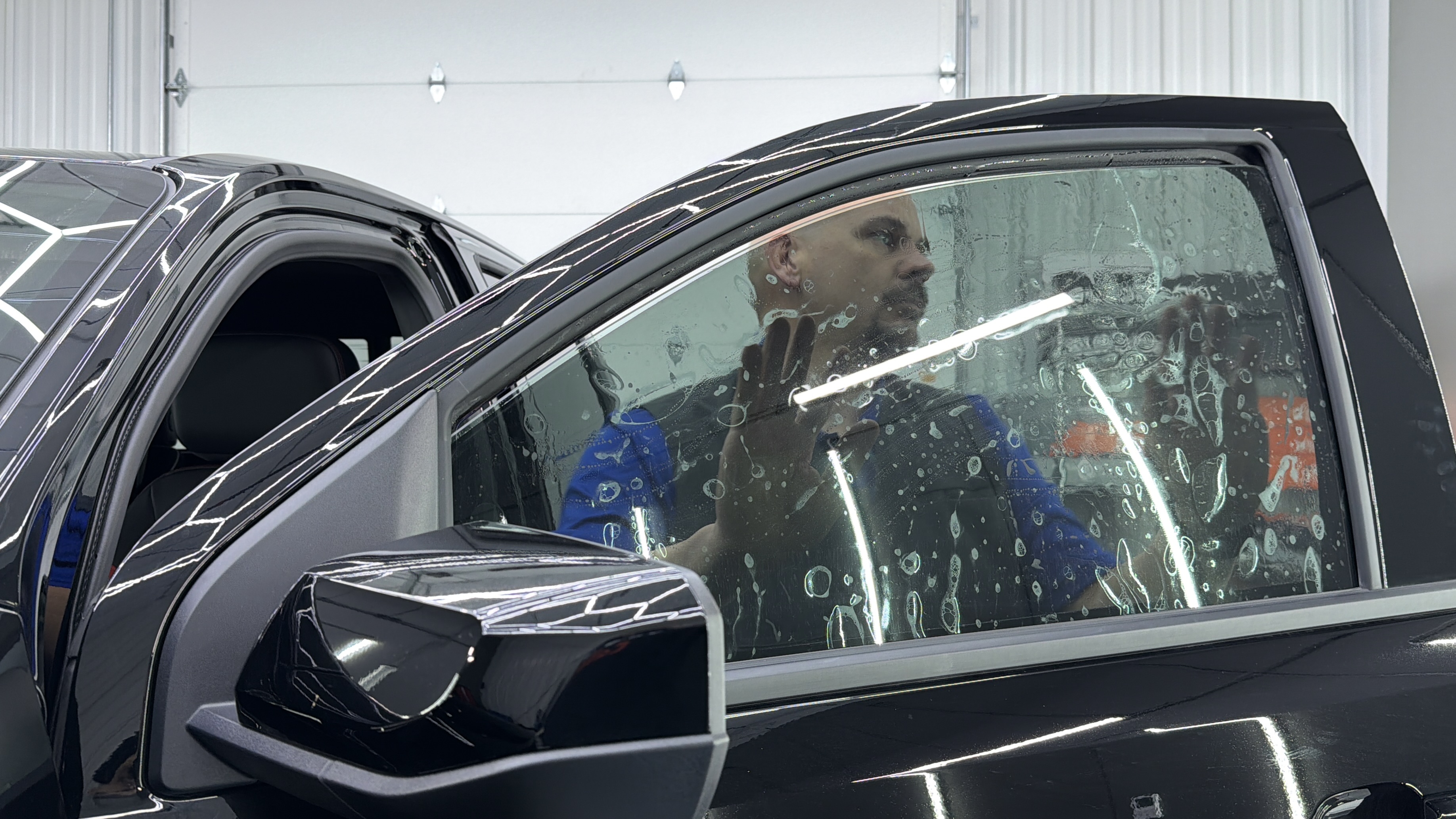
Window film is applied with a slip solution — a water-based liquid that lets the installer position the film precisely on the glass before it sets. Most of that solution gets squeegeed out during installation, but a small amount stays trapped between the film and the glass.
Curing is that remaining moisture evaporating out through the film. Until it does, the adhesive has not reached full bond strength.
How long it takes depends on temperature and humidity. Warm, dry, sunny conditions cure film faster. Cold or damp weather takes longer, and Chattanooga's humidity means our curing times run toward the longer end of typical ranges.
Haziness or a milky look. This is the moisture still working its way out. It clears as the film cures.
Small water bubbles or pockets. Same cause. They shrink and disappear.
A slightly cloudy appearance in certain light. Normal during the cure period.
None of these require action. The film is doing exactly what it is supposed to do.
What is not normal: hard creases, sharp-edged bubbles that do not change over weeks, visible dirt or debris under the film, or peeling at an edge. Those are installation issues, not curing, and they are worth a call.
Do not roll the windows down. This is the one that matters most. The adhesive has not fully bonded, and lowering a window drags the top edge of the film against the door seal. That can peel or crease it permanently.
Three to five days is typical. Longer in cold or wet weather. If you are unsure, wait — there is no downside to giving it extra time.
Do not clean the inside of the glass. Give it about a week. Cleaning too early can shift film that has not fully set.
Do not pick at bubbles or edges. Whatever you see will resolve on its own. Pressing on a bubble does not push the moisture out, and picking at an edge is how a fine install becomes a peeling one.
Park in the sun if you can. Slightly counterintuitive, but warmth speeds curing. A car that lives in a cold garage takes longer.
Leave any protective tabs alone if your installer used them.
Once cured, tinted glass is easy to live with. Two things to know.
Never use ammonia-based cleaners. Ammonia degrades the adhesive and can cause discoloration or early failure. It is in most household glass cleaners, so read the label. Use a non-ammonia automotive glass cleaner instead.
Use soft microfiber, not paper towels or abrasive pads. Film scratches more easily than glass. Scrapers and anything gritty will mark it permanently.
Beyond that, tinted glass cleans like any other glass. Spray onto the towel rather than the glass to keep cleaner off the edges, and wipe gently.
Quality ceramic film carries a lifetime warranty covering fading, bubbling, peeling, and discoloration — the failures that come from the film itself rather than from something that happened to it.
What warranties do not cover: damage from ammonia cleaners, scratches from abrasives, physical damage from rolling a window down during curing, or issues caused by pre-existing defects in the glass.
That last one is worth mentioning. If a window has a chip or a deep scratch, film applied over it will not hide it and may draw attention to it. We inspect glass before installing and will point out anything that will show.
Contact us if you see hard creases, sharp bubbles that have not changed in a month, debris trapped under the film, or any edge starting to lift. Those are fixable, and they are easier to address sooner rather than later.
Almost every tint problem people blame on the film traces back to what happened in the first week. Leave the windows up, be patient with the haze, and let it cure.
Do that and quality ceramic film looks the way it did on install day for as long as you own the vehicle.
Answers to the burning questions in your mind.

Plan on three to five days before rolling windows down, and closer to a week in cold or rainy weather. Cure time depends on temperature and humidity, so a warm sunny stretch cures faster than a cold damp one.
We will give you a specific timeframe at pickup based on the film and the weather that week. When in doubt, wait longer — nothing bad happens from being patient, and rolling down early can peel a fresh edge.
That is normal and it resolves on its own. What you are seeing is the small amount of application solution still trapped between the film and the glass. As it evaporates through the film, the haze clears and the bubbles disappear.
Give it a few weeks before you worry. If you still see defects after a month, or if you see hard edges and creases rather than soft haze, contact us — that is different and we will look at it.
Use a non-ammonia glass cleaner and a soft microfiber towel. Ammonia breaks down the adhesive and can cause the film to discolor or fail early, and it is the main ingredient in most household glass cleaners.
Also avoid abrasive pads, scrapers, and anything with grit. The film surface scratches more easily than glass does.
.avif)